

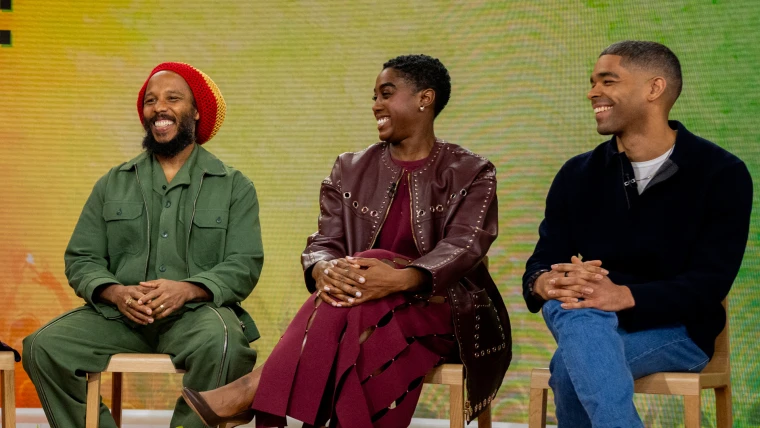
Bob Marley children news is never just about family updates; it is about a global legacy portfolio spread across music, fashion, film, and social impact. When the Marley name surfaces in headlines, the subtext is always the same: how is one of the most powerful cultural brands on the planet being carried, split, and sometimes contested by his many children. The stakes are not only emotional, but deeply commercial.
Over time, the Marley family has become a case study in multi-heir brand stewardship. Different children hold different slices of the story—roots-reggae purity, commercial reggae-pop, lifestyle products, philanthropy. From a business perspective, that diversification spreads risk, but it also complicates the narrative every time Bob Marley children news resurfaces in the global press.
Legacy Signals: How Each Child Extends A Piece Of The Brand
When a new album, documentary, or business venture from one of Marley’s children is announced, it functions as a signal about where the legacy is heading next. Fans and investors read Bob Marley children news as an indicator of continuity: is the original ethos being honored or diluted. That’s not a small question when the parent brand has near-mythic status.
What I’ve seen is that audiences tend to segment the family output instinctively. Some projects are perceived as “core Marley,” others as more experimental or commercial. That segmentation isn’t inherently bad; in fact, it allows the ecosystem to reach different market segments without forcing every child into one rigid storyline. The risk is when internal disagreements spill into public view and turn strategic diversity into perceived fragmentation.
The Reality Of Managing A Multi-Heir Cultural Portfolio
Managing a single-figure legacy is hard; managing many heirs is an order of magnitude more complex. Bob Marley children news often hints at this reality without spelling it out. There are rights, royalties, creative approvals, and philosophical disagreements in the background of almost every major Marley-related release or brand extension.
From a practical standpoint, the family has done better than many comparable estates. There is still a largely coherent global image, and the Marley name retains high trust metrics with fans across generations. But no family is immune to tension, and any public dispute—about music direction, commercial deals, or representation—can translate directly into reputational risk if fans feel the core values are being traded too cheaply.
Media Pressure, Public Expectations, And The Weight Of Myth
Every time a Marley child performs, launches a product, or gives an interview, the comparison set is unfairly high. The mythos around Bob Marley himself creates a benchmark no one can realistically match. Bob Marley children news therefore often carries an implicit judgment: are they “worthy” of the surname. That framing may sell clicks, but it is a trap in terms of long-term audience relationships.
The data tells us that heritage brands perform best when they stop forcing direct comparison and instead lean into continuity plus evolution. For the Marleys, that means allowing each child to bring their own sound, politics, and priorities without constantly anchoring the narrative in a one-to-one comparison with their father. Overplaying the “second coming” angle sets everyone up for disappointment.
Strategy And Risk: Commercial Expansion Versus Authenticity
Look, the Marley name has become a billion-level asset across recorded music, live performance, merchandising, cannabis, beverages, and more. Every new Bob Marley children news item that touches a commercial venture inevitably revives the old tension between authenticity and monetization. Fans want the message; the market wants margin.
From a strategic angle, the most sustainable route is controlled expansion anchored in clear values. When a Marley child fronts a project that obviously aligns with themes like social justice, spirituality, or community, audiences generally accept the commercial layer as a vehicle rather than a sellout. When the alignment is less clear, criticism escalates quickly, and the family has to spend energy re-centering the narrative.
Context: What Bob Marley Children News Reveals About Legacy Economics
In legacy economics, the second and third generations are where brands either stabilize or fracture. Bob Marley children news is essentially an ongoing barometer of which outcome is more likely. Are collaborations between siblings framed as unity and continuity, or are solo moves framed as divergence and competition.
From a practical standpoint, the Marley case shows that spreading responsibility across many children can work, as long as there is a shared baseline of mission and quality control. The family will never fully escape scrutiny; the mythology is too big for that. But if they continue to treat the name as a long-term public trust instead of a short-term cash machine, the next wave of headlines can strengthen, rather than dilute, the story their father started.

